


 Andrew Tan


Modernising legacy systems does not simply mean updating them. It’s about transforming your systems in preparation for the new developments in technology.
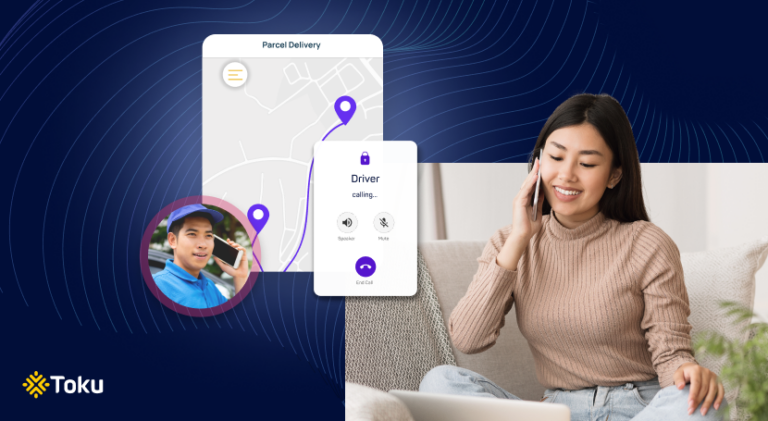
Number masking is a privacy feature that lets two parties call or message each other without revealing their real phone numbers. A temporary or virtual number is assigned to the interaction and routes communication between both sides. Businesses use it to protect customers, contractors, and employees while keeping service interactions within a controlled, auditable environment.
Many customer interactions still depend on direct communication. A delivery driver may need to call a customer, a marketplace seller may need to coordinate a handover, or a service provider may need to confirm an appointment.
The challenge is that these interactions often expose personal phone numbers. Once a number is shared, the business has less control over how it is used. Number masking helps businesses keep communication moving while protecting customer privacy.
Why do businesses use number masking?
Customers expect convenience, but they also expect businesses to protect their personal information. In industries where employees, contractors, partners, and customers need to communicate directly, phone numbers can become unnecessarily exposed.
Number masking reduces that exposure. It allows communication to happen within a controlled environment, helping businesses protect customers, employees, and partners.
How does number masking work?
Number masking works by assigning a temporary virtual number to an interaction. When one party calls or sends a message, the communication is routed through the masked number instead of showing the real number.
The business can control how long the number remains active, which parties can use it, and whether the interaction is linked to a specific transaction, booking, or case.
Which industries use number masking?
Number masking is useful whenever two parties need to communicate without exchanging personal contact details.
Common use cases include delivery and logistics updates, ride-hailing, online marketplaces, healthcare appointments, financial services verification, property viewings, field service coordination, and customer support callbacks.
How does number masking protect customers?
For customers, number masking helps reduce the risk of unwanted follow-up contact, spam, harassment, or misuse of personal information. They can complete the interaction without exposing their real number to every person involved in the service journey.
This is especially important in high-volume or partner-led service models, where customers may interact with multiple agents, drivers, contractors, or third-party providers.

Get monthly nuggets of wisdom for all things customer experience in your inbox
How does number masking protect businesses?
For businesses, number masking improves control over customer communication. It helps keep interactions within approved workflows, supports privacy expectations, and creates better visibility into call and message activity.
It can also support trust and safety by reducing the need for employees or partners to use personal numbers when communicating with customers.
Does number masking work for both calls and SMS?
Yes. Number masking can be applied across voice and SMS. For voice, calls are routed through a virtual number so neither party sees the other’s real number. For messaging, SMS can be relayed through a masked sender or virtual number depending on the setup.
This gives businesses flexibility to support different interaction types while maintaining privacy controls.
What should businesses consider before implementing number masking?
Before implementing number masking, businesses should consider routing logic, number availability, message requirements, call recording policies, retention periods, integration with internal systems, and regional telecom regulations.
They should also define when masking starts, when it ends, and how exceptions are handled.
Where Toku fits
Toku provides programmable voice and messaging capabilities that help businesses build secure, privacy-conscious customer interactions. With number masking, organisations can enable direct communication while protecting personal contact details.
Conclusion
Number masking helps businesses balance convenience with privacy. It keeps customers, employees, and partners connected while reducing unnecessary exposure of personal phone numbers.
See how Toku helps businesses build secure voice and messaging experiences with privacy built in.
Frequently Asked Questions
 Rajesh Gopinathan
 Beatriz Ruiperez
 V K Sanjeed