 Nora Huin



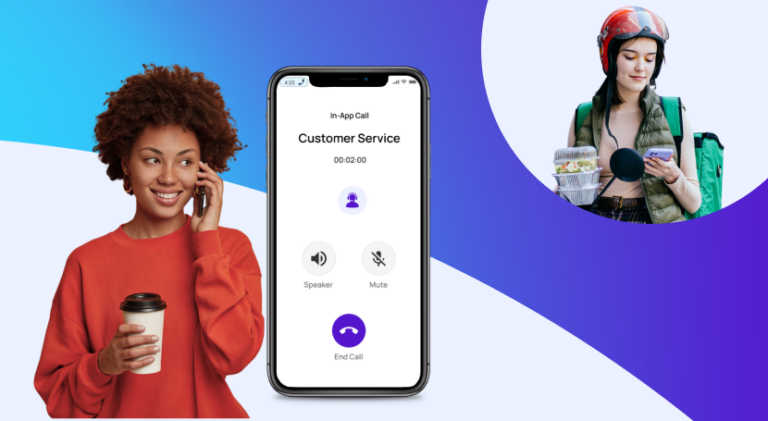
Most customers want smooth, seamless experiences backed by data-enriched in-app communications. The question is how enterprises can deliver this at scale.
A cloud contact centre solution is a platform that manages customer conversations across voice, chat, messaging, and email from a single cloud-based system. It replaces on-premise phone infrastructure with tools for routing, AI automation, analytics, and CRM integration, letting enterprises scale service operations across markets without rebuilding their tech stack.
Enterprise contact centres have become more complex than the phone queues they were originally built to manage. Customers now move between voice, chat, messaging, email, and digital self-service, often expecting every channel to carry the same context.
For many organisations, legacy systems struggle to keep up with that level of speed and continuity. Cloud contact centre solutions offer a more flexible foundation for managing service operations, especially when teams need to scale across markets, channels, and customer journeys.
Why are enterprises moving from on-premise to cloud contact centres?
Cloud contact centres help organisations move away from rigid infrastructure and towards more flexible service operations. Teams can add channels, adjust routing, support remote or distributed agents, and introduce new capabilities without rebuilding the entire environment.
This flexibility matters because customer expectations, service volumes, and business requirements change quickly. A cloud-based contact centre platform gives leaders more room to adapt.
What does omnichannel support actually mean for a contact centre?
Customers rarely think in channels. They think in outcomes. A customer may start with a web form, follow up through messaging, and then call when the issue becomes urgent.
Enterprise cloud contact centre solutions should support connected engagement across voice and digital channels. More importantly, they should help preserve context so customers do not need to repeat themselves at every step.
What AI capabilities should a cloud contact centre platform have?
AI is becoming an important layer in modern contact centre management. It can support self-service, call summaries, agent assist, sentiment analysis, quality monitoring, and conversation analytics.
When evaluating AI capabilities, enterprises should look for practical use cases that fit existing operations. Automation should reduce friction, improve consistency, and support human teams where judgement is still needed.
Accuracy also matters. Benchmarks show transcription error rates can range from 15–20% in many systems, while more optimised models like Toku AI can reduce that to under 4%, significantly improving downstream analytics and agent workflows.
Does a cloud contact centre need to integrate with CRM?
A contact centre cannot operate effectively in isolation. Agents need access to customer records, case histories, service workflows, and backend systems.
The strongest cloud contact centre solutions integrate with CRM, ticketing, workflow, and reporting platforms. This helps agents act with context and gives leaders a clearer view of service performance.
How does a cloud contact centre handle seasonal volume spikes?
Enterprise contact centres need to handle seasonal peaks, campaign spikes, market expansion, and unexpected disruptions.

Get monthly nuggets of wisdom for all things customer experience in your inbox
A cloud platform should make it easier to scale capacity, support distributed teams, and maintain service continuity. For organisations operating across APAC, regional infrastructure and reliable call quality are especially important.
What kind of reporting should a cloud contact centre provide?
In many contact centres, agents spend 30 to 90 seconds per interaction on wrap-up tasks, creating a clear opportunity for automation to improve productivity and reduce backlog.
Leaders need to understand what is happening across queues, channels, teams, and customer journeys. Basic reporting is no longer enough.
Cloud contact centre platforms should provide real-time dashboards, performance analytics, conversation insights, and reporting that connects operational metrics with customer outcomes.
Is a cloud contact centre secure for handling customer data?
Enterprise customer conversations often involve sensitive data. That makes security and governance central to contact centre decisions.
Organisations should evaluate access controls, data handling, recording policies, auditability, privacy controls, and compliance requirements. Strong governance helps protect customers and gives teams confidence as they scale.
How long does it take to implement a cloud contact centre?
Technology selection is only one part of the decision. Enterprises also need to consider implementation, migration planning, integration work, change management, and long-term support.
A strong partner should understand both the platform and the operational environment it needs to fit into.
Where Toku fits
Toku supports enterprises with cloud communications, AI-powered contact centre capabilities, voice solutions, and customer engagement infrastructure across APAC. This helps organisations modernise service operations while staying connected to the systems and workflows their teams already use.
Conclusion
The right cloud contact centre solution should help enterprises move faster without losing control. It should connect channels, support agents, strengthen visibility, and provide a scalable foundation for future customer experience needs.
Explore how Toku can help your enterprise build a more scalable, connected contact centre here.
 V K Sanjeed
 Ana Castrillon